



 Click it and Unblock the Notifications
One of the main purposes of having a savings account is to develop the habit of savings amongst individuals.

One of the main purposes of having a savings account is to develop the habit of savings amongst individuals. Though some of the youngsters of this generation hardly have the habit of saving as they end up spending all their earned money without having a thought to save for the future. Almost all the banks in India offer savings account to its customers and the facilities offered usually differs from one bank to another.
The concept of savings account is not a complicated banking tool and today having a savings account has become part and parcel of most of the working-class people.
Let's understand in brief about savings account and its features.

What is a Savings Account?
A Savings account is an interest-earning deposit account which can be held at a bank or any other financial institution. They earn a decent interest rate on the deposited amount. The safety and the liquidity factor associated with a savings account makes it a great option for individuals to park their funds in it for fulfilling their short term needs.
Though the savings account has some limitations on withdrawal, it offers remarkable flexibility which makes investors build an emergency corpus fund and save for a short term goal.
This account can be opened individually or jointly. Even minors who are aged over 10 can open a savings bank account.
Features of Savings Account
- Interest Rates - Savings Account offers meagre interest rates on its deposits which will be compounded on a half-yearly basis. The rate of interest offed by banks will be slightly higher than the rate of inflation and this will help your money to grow over some time.
- Safe and Highly Liquid - Savings account offers safety to its customers and the parked funds can be withdrawn any time by the account holder depending on the requirement.
- Easy Transactions - Savings account can be used to receive or send payments and this can be done through debit card or Net Banking. The ease to do transactions will cut down the dependency on cash for conducting all the transactions, especially for bill payments.
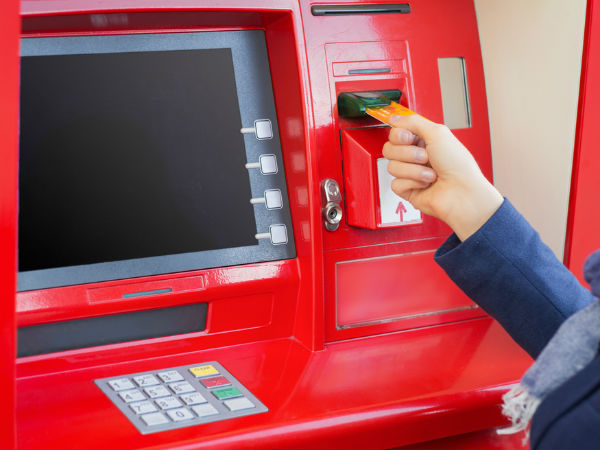
- ATM facilities - You can access your cash deposited in savings account through ATMs. Most banks will have their chain of ATMs spread across the length and breadth of the country. If in case you are unable to find your own bank's ATM near you, you can still access your account using other banks ATM facilities.
- Bill Payments - Having a savings account will ease your bill payments process as this account can be used as a platform to make payments for utility bills be its water bill, electricity bill, phone recharge and so on directly through a savings account.
- Debit Card - Banks will offer ATM/Debit card to the holders of a savings bank account. This will help you to access your account through ATMs apart from respective bank branches. These cards can be used to make payments at any of the point of the service centre or to through online payment gateway and so on.
- Mobile Banking and Net Banking - The bank usually provides mobile and net banking facilities which will come in along with your savings account as this will help to carry on the transactions easily. One can send or receive the payments just by logging into their account online round the clock. You can even download the mobile banking app and make your banking activities more easy as it can be done from anywhere.
- Cross Product Benefit - A few banks in India offer cross-product benefits to its savings bank account. If you have a savings account in a bank you will be eligible to get special benefits to avail services of other products.

Now let's know the list of things to check before opening a savings account.

Minimum Balance
The customers must maintain a minimum balance amount in their savings bank account to receive service benefits be it to keep the account open or to receive interest. The minimum balance in public sector banks is comparatively less as against the one set in private sector banks.
In savings account SBI, the minimum balance in metro and urban centre branches is Rs 3,000, in rural areas the average monthly balance (AMB) of Rs 1,000 has to be maintained and the one in semi-urban branches the AMB is Rs 2,000.
In savings account HDFC, customers have to maintain Rs 10,000 in their regular savings account in metro cities, Rs 5,000 in semi-urban branches and Rs 2,500 in rural branches.

Interest Rates
Most of the banks in India offer the same interest rates on savings accounts to its customers following deregulation by the Reserve Bank of India since March 1, 2003. It is important to know the interest rates offered by banks on savings bank account before opting to open one.
SBI is currently offering an interest rate of 3.25% per annum on savings bank account for balances of up to Rs 1 lakh.
HDFC is offering a 4.00% interest rate per annum.
Savings Account Axis Bank is offering 3.50% per annum if the balance amount is less than Rs 50 lakh.
Savings Account in Post Office will fetch an interest rate of 4% per annum for individual or joint accounts.

Location of Bank
It is better if you choose a bank which is either near to your home or office as transactions are done at a home branch will attract fewer charges. Having easy accessibility to the location will also help you to visit the bank easily without facing many hassles.

Service Quality
The services and fees levied by banks differ based on the public and private sector banks. It is often noticed that private sector banks offer good quality service but they do charge accordingly for the services rendered. On the other hand, the fee charged for services offered by the public sector banks are comparatively less but it may be stressful at times.

Limits on Cash Withdrawal
Banks have put a cap on cash withdrawal limit and this usually defers from one bank to another.
For example, the largest public sector lender, State Bank of India offers its customers to withdraw cash using YONO cash facility with a minimum cash withdrawal of Rs 500 and maximum of Rs 20,000 from an account in a day and the ceiling per transaction is Rs 10,000.
GoodReturns.in
About the Author
Archana is a Content Writer at GoodReturns. She has been writing articles related to investment planning and personal finance for more than two years.
More From GoodReturns

New PAN Card Rules From April 1, 2026: How To Apply For New PAN Card Via Protean, E-Filing Portal?

LPG Gas Cylinder Prices Hiked Again From April 1; 19 KG LPG Gets Costlier By Rs 218; 14.2 KG LPG Unchanged

Gold Rate in India Rises Over Rs 37,000/24K in Three Days; Will Jump in Gold Price Today Continue on 31 March?

Gas Cylinder Booking Rules: 5 Things To Know For Your 14.2Kg, 19KG, 5KG, 10KG LPG Booking In April 2026

Gold Rate Today Continues Rally, 24K Jumps Over Rs 35000 in 2 Days; 22K & 18K Gold, Silver Prices in Delhi

Bank Holiday In April 2026: Banks To Be Closed For 14 Days; Good Friday, Baisakhi To Akshaya Tritiya

Gold Price Today Declines After 3-Day Surge; Check Latest 22K, 24K, 18K Gold & Silver Rates in Delhi on 2April

Gold Price Today, April 3: 22K, 24K Rates Jump Across Tanishq, Malabar, Kalyan & Joyalukkas & IBJA

5 New Shares On One Soon: Anil Agarwal's Vedanta Demerger To Take Place in April, Says Report

Fresh Drop in Gold Rate Today; Silver Stable: Latest 22K, 24K, 18K Gold & Silver Prices in Delhi on 30 March

Govt Approves PDS Kerosene Distribution in 21 States for 60 Days, Sets 5,000 L Storage Limit Amid LPG Crisis


 Sign in with Google