



 Click it and Unblock the Notifications

Investors can leverage some finer points of The Income Tax Act in order to legitimately minimize the tax liability on exiting investments made in real estate, stocks and mutual funds.
In the case of real estate, the rate of taxation varies depending on the duration for which the asset in question was held by the assessee before selling it. Assets held for less than 24 months are treated as short-term capital assets and capital gains arising from the sale of such assets are short-term capital gains which have three disadvantages:
- Such capital gain is treated as normal income and taxed at the slab rates applicable to the seller. This usually results in higher taxation as compared to the flat tax rate of 20% applicable to long-term capital gains.
- No indexation is available in computing the gain from the sale of such assets. This means that the cost of acquisition is not adjusted for inflation unlike in the case of long-term capital gains.
- No option is available for saving short-term capital gain tax by investing the proceeds of the sale in a residential house.
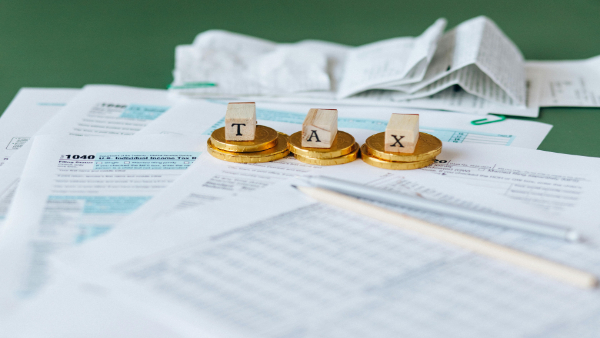

While exiting a real estate investment one should be mindful of the period of holding and as far as possible exit only after holding the asset for 24 months or more.
If one has purchased a house property to save capital gains tax which arose from an earlier sale of another house property or from the sale of any other long term asset, then the house property so purchased has to be held for a minimum period of 36 months. In case the asset is sold before completion of completion of the minimum holding period of 36 months, it results in forfeiture of the tax benefit availed on the sale of the earlier asset.
The taxation of stocks and mutual funds also varies from one instrument to another and is different for different holding periods. Here again, the tax rate for long-term capital gain is significantly lower than the tax rate applicable to short-term capital gain. The different holding periods for different types of instruments to qualify as long-term is given below:
| TYPE OF INSTRUMENT | MINIMUM HOLDING PERIOD |
|---|---|
| Listed equity shares | 12 months |
| Unlisted equity shares | 24 months |
| Debt mutual fund | Always treated as short term from 1/4/2023 |
| Equity mutual fund | 12 |
As can be seen from the chart above, gains from the sale of debt mutual funds always attract tax at the normal tax slabs applicable to the seller. Thus, these are not tax-friendly instruments.
Further, planning the timing of exit for listed and unlisted equity investments can result in substantial tax savings. Selling after the stipulated holding period to qualify long-term capital gains also opens the door for tax savings through investment in a residential house property.
More From GoodReturns

New PAN Card Rules From April 1, 2026: How To Apply For New PAN Card Via Protean, E-Filing Portal?

LPG Gas Cylinder Prices Hiked Again From April 1; 19 KG LPG Gets Costlier By Rs 218; 14.2 KG LPG Unchanged

Gold Rate in India Rises Over Rs 37,000/24K in Three Days; Will Jump in Gold Price Today Continue on 31 March?

Gas Cylinder Booking Rules: 5 Things To Know For Your 14.2Kg, 19KG, 5KG, 10KG LPG Booking In April 2026

Bank Holiday In April 2026: Banks To Be Closed For 14 Days; Good Friday, Baisakhi To Akshaya Tritiya

Gold Price Today Declines After 3-Day Surge; Check Latest 22K, 24K, 18K Gold & Silver Rates in Delhi on 2April

Gold Price Today, April 3: 22K, 24K Rates Jump Across Tanishq, Malabar, Kalyan & Joyalukkas & IBJA

5 New Shares On One Soon: Anil Agarwal's Vedanta Demerger To Take Place in April, Says Report

Fresh Drop in Gold Rate Today; Silver Stable: Latest 22K, 24K, 18K Gold & Silver Prices in Delhi on 30 March

Govt Approves PDS Kerosene Distribution in 21 States for 60 Days, Sets 5,000 L Storage Limit Amid LPG Crisis

Hyderabad Gold Rates Today Crash By Rs 40,000 After 6 Days, Silver Rate Falls By Rs 10,000: 24K, 22K, 18k Gold


 Sign in with Google