
 A Oneindia Venture


 Click it and Unblock the Notifications
CNG Price in India
The CNG price in India (Mumbai) stands at ₹81.00. No change recorded in the CNG price compared to last month. Over the past 12 months, the CNG price trend has been increasing, with an increase of ₹1 from June 2025 to May 2026. The most significant price increase was ₹0.50 in September 2025.
The Compressed Natural Gas (CNG) prices in India will be determined by the government of India. The domestic prices of CNG will be based on the global prices of the natural gas which India imports from abroad. Any rise or dip in the global natural gas will have a simultaneous effect on domestic CNG rates in India. India imports more than half of the natural gas from foreign countries to meet its domestic requirements and it costs the government more than double the domestic rate. With the increasing awareness amongst the people to preserve the natural environment for making this earth a better place to live in, more people in India are switching to CNG enabled vehicles.
CNG Price in Indian Metro Cities & State Capitals
| City | Price | Price Change |
|---|---|---|
| New Delhi | ₹77.09 | 0.00 |
| Mumbai | ₹81.00 | 0.00 |
| Chennai | ₹91.50 | 0.00 |
| Bangalore | ₹90.00 | 0.00 |
| Hyderabad | ₹97.00 | 0.00 |
| Bharatpur | ₹92.50 | 0.00 |
| Dewas | ₹96.00 | 0.00 |
| Firozabad | ₹93.85 | 0.00 |
| Mathura | ₹93.00 | 0.00 |
| Meerut | ₹86.05 | 0.00 |
| Rewari | ₹81.71 | 0.00 |
| Sonipat | ₹86.60 | 0.00 |
| NCR | ₹77.09 | 0.00 |
State-Wise CNG Price in India
| State | Price | Price Change |
|---|---|---|
| Andhra Pradesh | ₹91.60 | 0.00 |
| Bihar | ₹87.90 | 0.00 |
| Chandigarh | ₹91.00 | 0.00 |
| Dadra and Nagar Haveli and Daman and Diu | ₹85.00 | 0.00 |
| Delhi | ₹77.09 | 0.00 |
| Gujarat | ₹80.44 | 0.00 |
| Haryana | ₹88.02 | 0.00 |
| Himachal Pradesh | ₹91.00 | 0.00 |
| Jammu & Kashmir | ₹92.00 | 0.00 |
| Jharkhand | ₹89.65 | 0.00 |
| Karnataka | ₹90.00 | 0.00 |
| Kerala | ₹90.00 | 0.00 |
| Madhya Pradesh | ₹88.25 | 0.00 |
| Maharashtra | ₹81.00 | 0.00 |
| Odisha | ₹88.26 | 0.00 |
| Pondicherry | ₹74.60 | 0.00 |
| Punjab | ₹87.58 | 0.00 |
| Rajasthan | ₹90.91 | 0.00 |
| Tamil Nadu | ₹91.50 | 0.00 |
| Telangana | ₹97.00 | 0.00 |
| Uttar Pradesh | ₹95.75 | 0.00 |
| Uttarakhand | ₹89.50 | 0.00 |
| West Bengal | ₹93.50 | 0.00 |
Compressed Natural Gas (CNG)
The term Compressed Natural Gas or CNG is a kind of fuel which can be used as an alternative in the place of petrol, diesel, gasoline, LPG/propane. The Compressed Natural Gas is made by compressing the natural gas which mainly contains methane to less than 1% of volume. This is considered as the safest fuel as it does not have any negative impact on the environment.
The use of CNG as a fuel to run vehicles was first discovered way back in the late 1800s. With the advent of technology and people becoming more aware of the hazardous effect of the use of petrol and diesel on the natural environment has made many people across the globe has helped the CNG vehicles to gain popularity.
The volumetric energy density of CNG is calculated to be 42% that of liquefied natural gas and is 25% that of the diesel.
Benefits of CNG
• CNG is a gaseous fuel and it mixes evenly and easily in atmospheric air.
• It increases the life of the lubricating oils as CNG does not dilute and contaminate the crankcase oil.
• CNG run vehicles are safer than those run by using gasoline.
• CNG run vehicles emit less pollution when compared with the gasoline ones.
• The CNG fuel is sealed and this helps to prevent loss of fuel either by spillage or evaporation.
• The cost of CNG is less when compared to other forms of fuel like petrol, diesel, gasoline and hence the usage of CNG reduces fuel cost.
• It is one of the most environmentally friendly fuel which burns cleaner and emits lower carbon content to the atmosphere.
What is Natural Gas?
The Natural Gas is a fossil fuel which is used as a primary source for cooking, heating and electricity generation.
It is formed by the decomposition of plants and animals through a natural process.
The natural gas can also be used for running vehicles, manufacturing plastics and other organic chemicals. It is one of the non-renewable resources which is available abundantly in nature.
Characteristics of Natural Gas
• The Natural Gas is highly flammable in nature due to the presence of high level of methane in it.
• It is usually tasteless, colourless and odourless in nature.
• The gas is less corrosive due to the presence of high level of methane and low level of carbon.
• The density of the natural gas is less when compared to that of air.
• In case of leakage, the natural gas can easily evaporate into the air and is non-harmful to the surrounding environment.
• The natural gas can be found easily in nature.
• The natural gas is abundantly available in nature.
Advantages of Compressed Natural Gas Vehicles
• The vehicles which are run using the natural gas has lesser maintenance cost when compared with other forms of hydrocarbon fuel powered vehicles.
• The CNG empowered vehicles are safer when compared to other alternative fuel run vehicles.
• The CNG fuel systems are sealed, prevents loss of fuel either from spillage or evaporation and hence less leakage.
• The CNG run vehicles increase the life of the lubricating oils.
• The CNG is less likely to ignite on the hot surface as it has a high auto-ignition temperature.
• The CNG run vehicles emit less carbon-di-oxide and this helps in reducing the greenhouse gas emission.
• The CNG enabled vehicles to emit less noise and this aids in reducing noise pollution.
• The users of CNG vehicles spend less on fuel when compared to those who use petrol and diesel fuel.
Drawbacks of Using CNG
• The CNG run vehicles require more space for fuel storage when compared to other traditional run vehicles.
• The CNG takes up more space for each gasoline gallon equivalent as it is a gaseous form of fuel.
• The cost to switch over from conventional run vehicles to CNG is quite expensive in India.
• The total number of CNG stations in India is less.
• The awareness among the common people in India about the usage of CNG and its benefits is relatively less.
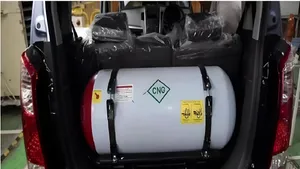
• Most of the vehicles available in India are pre-designed to use petrol or diesel as fuel. One has to bear additional costs to convert the normal vehicle into CNG enabled ones as the tanks used to store the CNG takes up extra space and it has to be adjusted either in the trunk of the card or on the bed of a pickup trunk.
Unique Features of Compressed Natural Gas
• It is a form of natural gas.
• It is stored at ambient temperature and high pressure.
• It is a supercritical fluid.
• The production cost of CNG is less.
• The CNG requires a much larger volume to store the energy equivalent.
• The CNG is experimentally stored at lower pressure in the form of an adsorbed natural gas in a tank and the same is adsorbed at 35 bar in various sponge like materials such as metal-organic frameworks and activated carbon.
Difference between Compressed Natural Gas (CNG) and Liquefied Petroleum Gas (LPG)
| Properties | CNG | LPG |
|---|---|---|
| Chemical Formula | CH4 | C3H8 |
| Contains | Methane | Propane |
| Storage Pressure | 20 - 25 Mpa | 2 MPa |
| Cylinder Weight | 1 | Approximately 3X |
| Energy Content | 9 Mega Joules/Litre | 25 Mega Joules/Litre |
| Density (vs Air) | 0.5537:1 | 1.5219:1 |
| State | Gaseous form | Liquefied or Gaseous form |
| Air: Gas Combustion Ratio | 10:1 | 25:1 |
| Operating Pressure | 1.1 kPa | 2.75 kPa |
How much does it cost to convert a vehicle to a CNG friendly one?
The cost of converting a petrol or diesel-run vehicle into a CNG one depends on the type of vehicle and CNG kit, Currently, the cost of conversion ranges somewhere between Rs 25,000 – Rs 50,000 approximately.
Which type of vehicles can be converted into CNG?
The spark-ignited engines can be converted successfully into CNG run vehicles. A specially designed conversion kit will be needed for the conversion process. This kit consists of a cylinder which has to be fitted in the boot of the car and other required equipment to allow gas to flow into the engine.
Will the fuel expenses come down after switching to CNG?
Yes, the fuel expenses based on the average running of a vehicle will come down substantially when compared with other popular fuels like petrol and diesel. The price of CNG is less compared to other forms of fuels. By using CNG, the vehicle’s mileage capacity will get enhanced, making it the most economical fuel.
Does usage of CNG have any harmful effect on the engine?
CNG or Compressed Natural Gas does not contaminate or dilute crankcase oil and hence it gives a new lease of life to the engine. The non-presence of lead content in CNG will help avoid fouling of plugs, hence enhancing plug life. As CNG as fuel enters the engine in the gaseous form, no carbon will be generated during the combustion of CNG, thus this will reduce the chances of wear and tear.
FAQs ON CNG PRICE IN INDIA
What is the current CNG price in India?
Which state in India has the lowest CNG price?
Which state in India has the highest CNG price?
How much does 1 kilogram of CNG cost in India today?
Latest Updates on CNG Price
The current CNG price in India today is ₹81.00 per kg. This price has remained stable compared to April 2026, which also recorded a price of ₹81.00.
In terms of historical data, the CNG price saw a gradual increase before reaching this stable rate. The price was ₹80.50 in March, February, and January of this year.
Local factors such as government regulations and supply chain dynamics may contribute to the stable pricing observed recently. Meanwhile, globally, oil market trends, supply chain interruptions, and ongoing geopolitical issues have been pushing gas prices in various regions.
While comparing with prices in the last 10 months in India, the highest CNG rate is recorded at Rs. 81.00, in May 2026.
10 May 2026The current CNG price in India today is Rs. 81.00. This reflects a slight increase from last month's price of Rs. 80.50 in March 2026. Over the past few months, the price has remained stable with no significant changes.
The prices have hovered around Rs. 80.50 since January 2026, indicating a period of stability in the local market. This increase can be attributed to recent adjustments in the global fuel market, which has faced fluctuations due to various economic factors.
Despite these changes, the demand for local CNG continues, as it remains a viable option for consumers. As for the global context, the oil market trends show signs of fluctuations, which often affect CNG pricing indirectly.
While comparing with prices in the last 10 months in India, the highest CNG rate is recorded at Rs. 81.00, in April 2026.
30 April 2026The CNG price in India today is ₹80.50 per kg. This price shows no change compared to the previous month and remains consistent since the start of the year. In the past ten months, the CNG price has stayed stable, supporting a clear trend.
There have been no significant local factors affecting prices recently. The market for CNG continues to be influenced by global oil prices, which have stabilized, contributing to the steady price seen in India. Supply chain dynamics are favorable, ensuring that the price of CNG remains steady.
While comparing with prices in the last 10 months in India, the highest CNG rate is recorded at Rs. 80.50, in April 2026.
20 April 2026As of today, the CNG price in India is ₹80.50 per kg. This price remains stable compared to previous months.
In February 2026, the price was also ₹80.50, indicating no changes over the last month.
This steady price pattern reflects a balance in local supply and demand dynamics within the country.
Globally, the oil market has shown stable trends, which likely contributes to these consistent prices.
While comparing with prices in the last 10 months in India, the highest CNG rate is recorded at Rs. 80.50, in March 2026.
30 March 2026The CNG price today in India is ₹77.00. This rate has remained stable over the past months, with no changes recorded since January 2026. The price has stayed constant at ₹77.00 for three consecutive months.
Locally, the reasons for this stability include consistent supply chains and regulatory environments. Meanwhile, global oil prices have not seen significant fluctuations, keeping domestic prices steady. Such a scenario is favorable for consumers as it ensures budget predictability.
While comparing with prices in the last 10 months in India, the highest CNG rate is recorded at Rs. 77.00, in January 2026.
20 March 2026The CNG price in India today is ₹77.00 per kg. This rate has remained unchanged compared to the previous month. There has been no increase or decrease in cost since January 2026.
Looking at the historical data, the CNG price has shown stability over the last several months, holding at ₹77.00 from February 2026 back to January 2026. There are no significant local factors affecting the pricing at this time.
Globally, the oil market has been stabilizing, which contributes to maintaining these prices. Despite minor fluctuations, the overall trend for CNG prices remains consistent.
While comparing with prices in the last 10 months in India, the highest CNG rate is recorded at Rs. 77.00, in January 2026.
12 March 2026As of September 17, 2024, CNG prices in India ranged from Rs. 75/- to Rs. 90.5/- per Kg. Specific city prices included Delhi at Rs. 75.09/-, Chennai and Kolkata at Rs. 88.5/-, Bangalore at Rs. 83/-, and Hyderabad at Rs. 92/- per kg.
CNG is a more affordable alternative to petrol and diesel in India. CNG cars offer approximately 40% and 25% savings compared to their petrol and diesel counterparts, respectively. This significant cost advantage has made CNG an attractive option for many consumers in India.
The Indian government has been actively promoting the use of CNG through various initiatives. These initiatives include providing subsidies to encourage the purchase of CNG vehicles, expanding the network of CNG stations across the country, and implementing policies that favor the use of CNG over traditional fuels.
Crude oil prices are facing pressure due to conflicting signals regarding global supply and demand. Investors are closely monitoring the impact of Hurricane Francine on U.S. production and anticipating the Federal Reserve's interest rate decision. As per latest reports The hurricane has disrupted 16% of natural gas production in the U.S. Gulf of Mexico.
Spot Natural Gas prices today are trading at $ 2.4/- per barrel, up by 1.6%.
17 September 2024
On average, India CNG rates today stay between Rs. 75/- to Rs. 89.5/- per litre for consumers. Today Chennai CNG rates stand at Rs. 88.5/- per liter while Kolkata CNG prices today are around Rs. 88.5/- per liter. CNG prices in Meerut today are holding a grip at Rs. 81/- per litre, and Delhi CNG rates today are around Rs. 75.09/- per litre, the same as the previous month. The CNG rate in Hyderabad today stands at Rs. 92/- per litre.
CNG is one of the significant fuels required for personal to industrial purposes throughout South Asian countries, where the middle-income population stands higher than. The various necessities of CNG for the general population ensure consistent demand is generated higher from urban regions like Mumbai, Bangalore, Delhi, Chandigarh and Kolkata. Since CNG prices in India today are tightly regulated by the state and central government, international turmoil has the least implications on CNG prices in India.
Commodity segments are moving in a mixed manner with oil trades holding a grip above the previous range, maintaining a positive outlook ahead. Investors around the globe would expect the Asian and US capital market performance to have a major influence on crude oil demand.
The US dollar index sustaining the uncertain market pressure, while the interest rate expectations by the US Federal Reserve ahead, might push investors away from energy and commodity trades by the end of this month.
International Crude oil prices today are floating around $ 75.7/- per barrel, falling $ 2.4/- or 3.12% since yesterday's closing.
GAIL India on Saturday declared reduction in the price of compressed natural gas (CNG) by Rs 2.50 per kg in 20 cities across India. These latest move has brightened prospects of petrol and diesel price cuts as well as state-run energy firms are bringing down retail prices of fuels ahead of the 2024 general elections.
The “substantial reduction” in CNG prices has been introduced across India in areas under its operation, GAIL said on Saturday. The reduction in prices ranged from 2.7% to 3.6% in 20 places including Varanasi, Jamshedpur, Bhubaneshwar, Cuttack, Dewas, Meerut, Sonepat, Dehradun, Puri and Adityapur, according to reports.
GAIL’s move matches with the move of 3leading state-run oil marketing companies (OMCs) -- Indian Oil Corporation, Bharat Petroleum and Hindustan Petroleum – reducing cooking gas rates by Rs 100/cylinder for all 360 million customers, as declared by PM Narendra Modi on Friday.
CNG cars produceslesser pollutants and greenhouse gases than petrol cars, making them a more environmental-friendly alternatives. CNG is also less expensive than petrol, resulting in lower fuel costs for CNG car owners.
10 March 2024-
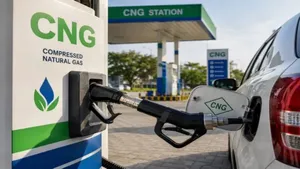 CNG Price Hike for Second Time in Just 2 Days in Delhi-NCR; IGL Raises Rates by Rs 3/Kg: City-Wise CNG Prices
 -
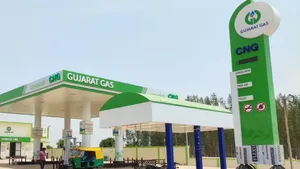 Adani Total Gas Share Price Leads Rally in City Gas Stocks; Gujarat Gas, GSPL Gain on PNG-CNG Supply Push
 -
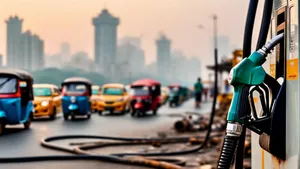 Mumbai CNG Pumps See Rush After Gas Pipeline Damage Disrupts Supply
 -
 CNG Prices Hike: IGL Increases CNG Prices By Rs 1 Per Kg In Delhi-NCR, Ghaziabad, More Cities; Full Rates Here
 -
 Delhi: Ban Petrol, Diesel, CNG Two-Wheelers, Phase Out CNG Autos, Recommends Draft EV Policy 2.0
 -
 Lumax Completes Acquisition of 60% Stake in Greenfuel Energy's Alternate Fuel Business for Rs 153 Crore
 -
 Lumax Resource Completes 60% Stake Acquisition in Greenfuel Energy's Alternate Fuel Business for Rs 153 Crore
 -
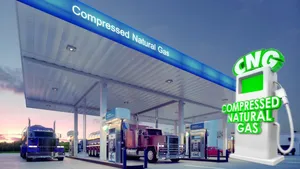 CNG Price Hiked By Rs 2 In Mumbai, Other Cities; Election Bound-Delhi Spared
 -
 CNG Prices In New Delhi, Haryana, Uttar Pradesh, Other States; Indraprastha Gas Hiked Prices By Rs 1 Per Kg
 -
 BUY GAIL-Backed PSU Natural Gas Stock For Rs 1,565 Target, Up 22% YTD; Motilal Oswal
 -
 250% Dividend Soon: PSU Stock Below Rs 450 To BUY, Natural Gas Share IGL Gets Rs 470-490 Target
 -
 Indraprastha Gas Q4 Results: Net Profit Rises 9% to Rs 433 Crore;Dividend Reveals Rs 5 Sh
 -
 India's April Fuel Consumption Up 6.1% YoY: Oil Ministry Data
 -
 ICE Records Surge in Global Natural Gas Activity; Indian Gas Prices Rise?
 -
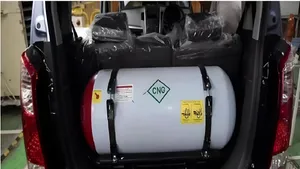 CNG Prices: Maharatna GAIL Joins Bandwagon, CNG Gets Cheaper By Rs 2.50 Per Kg; Latest Rates Here
 -
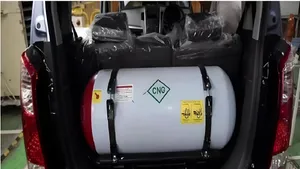 CNG Gets Cheaper In Delhi: IGL Cuts CNG Prices In National Capital, Check New Rates
 -
 Mahanagar Gas Ltd Slashes CNG Prices, Over 15% Correction In Shares Price
-
Block for 8 hours
-
Block for 12 hours
-
Block for 24 hours
-
Don't block

 Sign in with Google
- Male
- Female
- Others
- Under 18
- 18 to 25
- 26 to 35
- 36 to 45
- 45 to 55
- 55+